Grenfell, Flixborough, and Fukushima - Incidents by Business Design
"What on earth do these events have in Common?" I hear you cry. Immediately followed by the "Why it's relevant ...

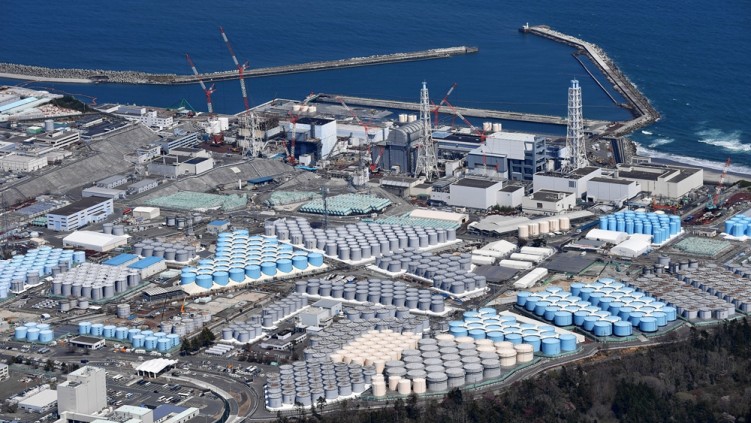
Tokyo Electric Power Company Holdings (TEPCO) has begun the controversial discharge into the sea of radioactively tritiated water arising from the 2011 Fukushima Daiichi nuclear disaster.
Despite reassurances from the International Atomic Energy Agency (IAEA), and others including the South Korean government, that the radiological impact on human health and the environment will be “negligible”, local fishing organisations and some neighbouring countries have voiced their strong opposition to the plan. But why, given those reassurances, are they taking this stance?
Is this another “trust me, I’m a scientist” case where a vocal minority chooses to disbelieve what the authorities, backed up by scientists, might pronounce about something? We’ve seen this with covid and childhood disease anti-vaxxers, g-m protesters, climate change deniers, and anti-nuclear campaigners. All of the scientific explanations and reasoning in the world will still not convince such groups on whether something is acceptable or not.
At Fukushima Daiichi, rain, groundwater and cooling water becomes contaminated through contact with radioactive materials within the damaged reactors. It is collected and treated to remove most of the radioactivity, and stored in over 1000 tanks on the site. These tanks are becoming full and the risk of leaks due to adverse weather or seismic events means something has to be done. TEPCO has determined that discharging the tritiated water into the sea is the best option.
Whilst the treatment removes most of the radioactivity, opposition centres around the fact that there still remains quantities of tritium (radioactive hydrogen) chemically bound up in the water. Tritium occurs naturally in the environment and is not that radiotoxic; studies show that tritiated water-bound tritium is not concentrated in humans or foodstuffs.
In terms of numbers, the amount of tritium to be released from Fukushima Daiichi is 22 TBq (tera becquerels) per year over 30 years. Without going into what this means scientifically, suffice to say it is comparable to the tritium discharges to the aquatic environment of many nuclear power plants around the world. Moreover, the discharges will be further diluted to one-seventh of the World Health Organization standard for drinking water and reach background levels a few kilometres out.
China’s accusation that Japan is treating the ocean “like a sewer” does seem to be tinged with a little bit of duplicity given its coastal nuclear power plants discharge five to ten times the amount of tritium into the Pacific each year than will be discharged from Fukushima Daiichi. Greenpeace has voiced its concerns about the situation and has also criticised the role of the International Atomic Energy Agency (IAEA) Atomic Energy Agency. However, many other commentators do think TEPCO is making the right choice and, along with the IAEA and G7, agree that the impact will be negligible.
However, the fears of the local fishing communities should not be dismissed; they are concerned about both safety and reputational damage. Whilst it is relatively straightforward to address the safety concerns through lots of number crunching and computer models, tackling the reputational issue and the collapse of the Fukushima fishing market is more of a challenge.
The communication of risk, particularly when it comes to radiation hazards, has been a long-standing challenge in the nuclear industry. Translating a scientific concept into something understandable is fraught with difficulties. When justifying the building of a new #nuclearpowerstation, for example, we like to use analogies and compare the very small routine radiation doses to members of the public to everyday activities: the dose will be less than you get than on an international flight, a fraction of a chest X-ray, eating so many bananas or Brazil nuts, sleeping with your partner, such and such a fraction of the natural background dose etc; you get the idea!
One scientist commenting on this case has said “a lifetime’s worth of seafood caught a few kilometres from the ocean outlet has the tritiated water radiation equivalent of one bite of a banana.” This might be mathematically correct but the reputational damage still remains and TEPCO and the Japanese government have a big task ahead of them.

John Mathieson is a non legal technical advisor on nuclear energy related issues in a number of key international markets. He has some 36 years’ experience, primarily involving the areas of radioactive waste management and decommissioning.
CONNECT WITH OUR SPECIALIST TEAM
Prospect Law is a multi-disciplinary practice with specialist expertise in the energy and environmental sectors with particular experience in the low carbon energy sector. The firm is made up of lawyers, engineers, surveyors and finance experts.
This article remains the copyright property of Prospect Law Ltd and neither the article nor any part of it may be published or copied without the prior written permission of the directors of Prospect Law.
This article is not intended to constitute legal or other professional advice and it should not be relied on in any way.
Prospect is a multi-disciplinary practice with specialist expertise in the energy and environmental sectors with particular experience in the low carbon energy sector. The firm is made up of lawyers, engineers, insurance and risk management specialists, and finance experts.
This article remains the copyright property of Prospect Law Ltd and neither the article nor any part of it may be published or copied without the prior written permission of the directors of Prospect Law.
This article is not intended to constitute legal or other professional advice and it should not be relied on in any way.
Further Reading
"What on earth do these events have in Common?" I hear you cry. Immediately followed by the "Why it's relevant ...
Over the past 14 months, the world has seen an ‘unprecedented disruption to societies, economies and global trade’ as a result ...
/*! elementor - v3.16.0 - 14-09-2023 */.elementor-heading-title{padding:0;margin:0;line-height:1}.elementor-widget-heading .elementor-heading-title[class*=elementor-size-]>a{color:inherit;font-size:inherit;line-height:...
It is very clear, 2021 will be unique and challenging with many twists and turns to keep us all interested in ...
The number of high-profile insurance disputes in the aftermath of COVID-19 has highlighted several longstanding and fundamental issues that affect ...
/*! elementor - v3.16.0 - 09-10-2023 */ .elementor-heading-title{padding:0;margin:0;line-height:1}.elementor-widget-heading .elementor-heading-title[class*=elementor-size-]>a{color:inherit;font-size:inherit;line-height:...