How Much Does Arbitration Cost?
In this article our agribusiness and disputes specialist Nina Winter explains the fundamentals of arbitration and the all important question ...

Amidst COP28, the UN Food and Agriculture Organisation released a new “roadmap” for reforming global food systems in line with 1.5C of warming. While it delineates 20 key targets spanning from 2025 to 2050, the specifics on how to achieve the COP28 Nuclear Commitments remain elusive.
There’s a viewpoint advocating for a “phase-out of fossil fuels” as the logical decision, calling for a consensus between ‘Climate Activists’ and ‘Energy Pragmatists.’
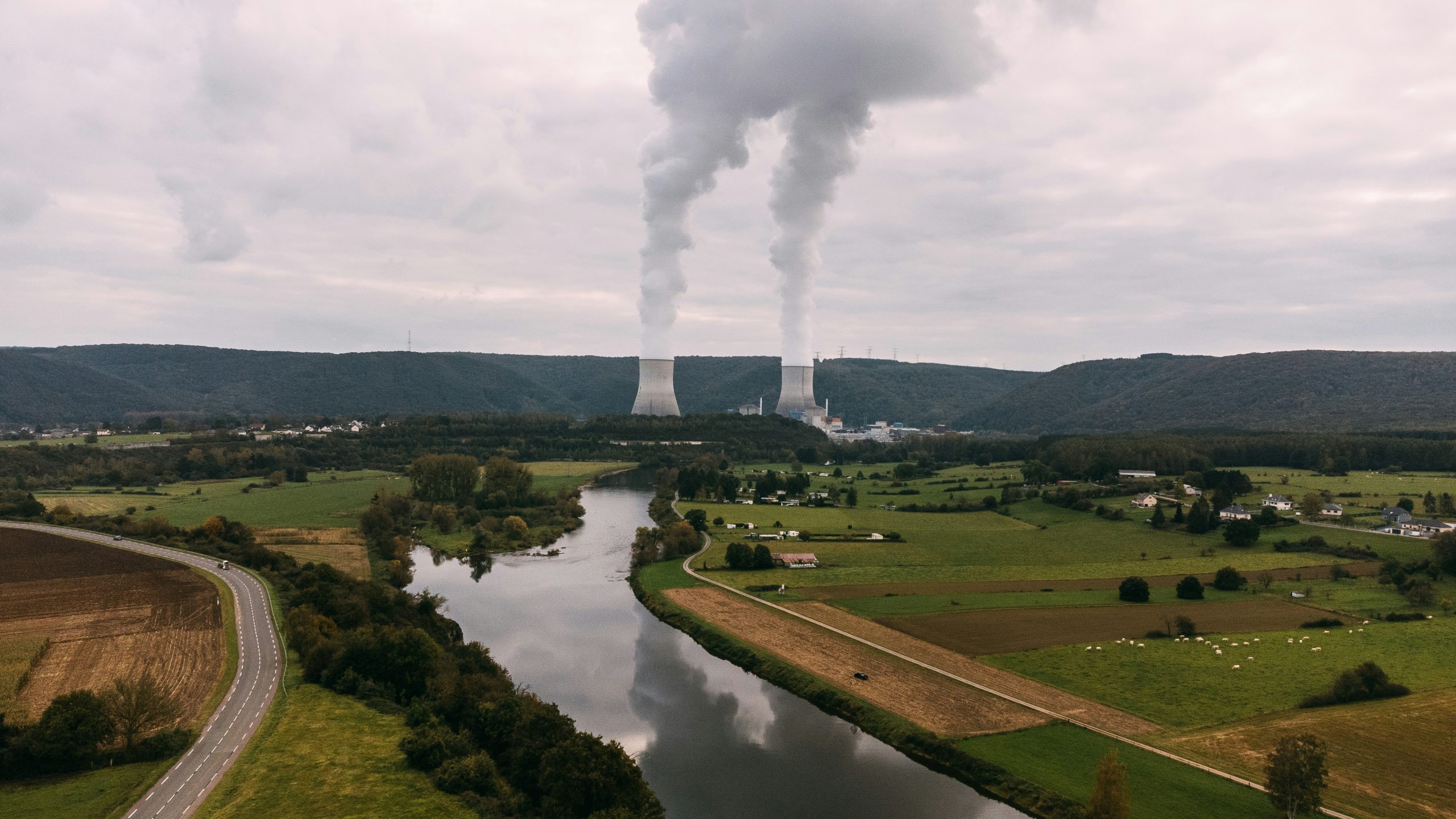
On December 2nd, during COP28, an alliance of 21 countries declared their commitment to triple the deployment of nuclear power by 2050. U.S. climate envoy John Kerry emphasized that achieving “net zero” emissions is impossible without building new reactors. The promotion of nuclear power has played a significant role in the COP28 talks however political concerns over the weaponisation of nuclear materials remain, be it the development of nuclear weapons or the deployment of ‘dirty bombs’.
The endorsing nations include Canada, Czechia, Ghana, Finland, Hungary, Japan, Moldova, Mongolia, Morocco, Netherlands, Poland, Republic of Korea, Romania, Slovakia, Slovenia, Ukraine, UAE, United States of America, and the United Kingdom.
While nuclear power plants can produce low-carbon electricity for up to 80–100 years, new projects require substantial upfront costs, necessitating the importance of securing access to affordable finance to build these projects.
The COP28 Declaration invites stakeholders of the World Bank and other financial institutions to:
The Declaration also pledges support for the development and construction of nuclear reactors, including small modular and advanced reactors for power generation and broader industrial decarbonization applications.
In conjunction with COP28, Markus Söder, the German opposition leader, and the chairman of the Christian Social Union (CSU), has criticised the federal government’s nuclear policy. If he participates in the government after the next federal election, he aims not only to restart old nuclear power plants but also to expand the role of nuclear power in Germany.
This shift involves three main demands:
While large conventional nuclear reactors are regarded as essential to a stable electricity network their cost and deployment time are considered Achilles’ Heel. The focus within the IAEA is on developing small modular reactors (SMRs), advanced reactors producing up to 300 MW(e) per module.
Globally there are more than 80 SMR designs and concepts that are in various developmental stages and some are claimed as being near-term deployable. There are currently four SMRs in advanced stages of construction in Argentina, China and Russia. With the intent to achieve competitiveness, ensure reliable performance, reduce the time required for construction, these reactors designed to be built in factories, could be deployed either as a single or multi-module plant. Common infrastructure issues also have to be addressed to be inline with COP28 Nuclear Commitments.
John Ireland is an internationally experienced energy specialist and senior business executive skilled in the development, negotiation, and management of businesses and technically complex contracts within both the Government and private sectors. John has grown complex businesses in Asia and the Middle East, and assisted international organisations to develop business in and from the UK through joint ventures and partnerships.
Prospect Law is a multi-disciplinary practice with specialist expertise in the energy and environmental sectors with particular experience in the low carbon energy sector. The firm is made up of lawyers, engineers, surveyors and finance experts.
This article remains the copyright property of Prospect Law Ltd and neither the article nor any part of it may be published or copied without the prior written permission of the directors of Prospect Law.
This article is not intended to constitute legal or other professional advice and it should not be relied on in any way.
Prospect is a multi-disciplinary practice with specialist expertise in the energy and environmental sectors with particular experience in the low carbon energy sector. The firm is made up of lawyers, engineers, insurance and risk management specialists, and finance experts.
This article remains the copyright property of Prospect Law Ltd and neither the article nor any part of it may be published or copied without the prior written permission of the directors of Prospect Law.
This article is not intended to constitute legal or other professional advice and it should not be relied on in any way.
Further Reading
In this article our agribusiness and disputes specialist Nina Winter explains the fundamentals of arbitration and the all important question ...
As the world moves towards a more sustainable future, the European Union (EU) is taking significant steps to empower consumers ...
In the spring of 2011, I came to the UK to assist a Chinese client in negotiating and completing the acquisition ...
In terms of risk transfer options, there are different types of mutual structures and membership options. A discretionary mutual can ...
On 15th March 2022, the Economic Crime (Transparency and Enforcement) Act (the ECTEA) came into force in the UK for the ...
Download Now For Free Are you looking to elevate your business's risk management strategy? Incorporating a Discretionary Mutual can be ...