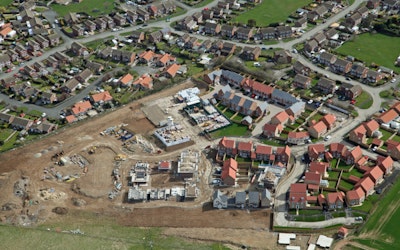
In R (Hill) v Derby City Council, Mr Justice Supperstone considered a claim by a local resident that sought to quash the decision of Derby City Council to grant planning permission for the Derby Waste Incinerator to Envirofusion Ltd (represented by Prospect Law).
R (HILL) v. DERBY CITY COUNCIL [2018] EWHC 768 (ADMIN.)

Background:
Envirofusion is based on the former Hanson Concrete Works, off Alfreton Road, and applied to Derby City Council for permission to test its waste disposal system, which involves heating waste to a temperature of 1,000°C for 18 months.
The plant would process up to 2.75 tonnes of waste per hour, based on a maximum operational running time of up to 100 hours a week. Gases from the process would escape into the outside air up a 22-metre stack, after passing through a filtration system. The waste would then be oxidised to produce molten ash.
The proposals were controversial and attracted more than 450 letters of objection.
Ground of Challenge and Judgment:
Mrs Hill challenged the decision on three grounds:
- the planning committee report was not made available online,
- the planning committee report was misleading,
- the Council did not have regard to material considerations.
Dr Ashley Bowes represented Envirofusion at the High Court hearing. Mr Justice Supperstone accepted his submissions and refused Mrs Hill permission to challenge the Council’s decision. In particular, it was held that:
- There is no duty to publish a planning committee report online. The obligation within the Local Authorities (Executive Arrangements) (Meetings and Access to Information) (England) Regulations 2012 only applies to decisions of a Council’s executive (see paragraph 4 of the judgment).
- Health and safety matters, such as the risk of fire and explosion, were considered in the grant of the environmental permit. Accordingly, the Committee was entitled to leave those matters for the regulation of the permit (see paragraphs 14 & 15 of the judgment). This issue arises from time-to-time when planning committees determine new or experimental technologies such as fracking.
It is worth remembering the observations of Mr Justice Gilbart in R (Frack Free Balcombe Residents Association) v West Sussex County Council [2014] EWHC 4108 (Admin.) at [100] that “the Planning Authority may in the exercise of its discretion consider that matters of regulatory control could be left to the statutory regulatory authorities to consider”
Entitlement to Costs:
Mrs Hill disputed that Envirofusion were entitled to its costs. Notwithstanding the common practice of the High Court to award the costs of preparing and filing its acknowledgment of service, Mrs Hill argued that Bolton MDC v Secretary of State for the Environment [1995] 1 WLR 1176 is authority for the proposition that only one set of costs would normally be ordered and that further costs would only be granted in exceptional circumstances.
Mr Justice Supperstone rejected that submission, holding in a further judgment that the Bolton rule does not apply to costs incurred preparing an acknowledgment of service. The Judge rejected the submission that the judgment of the House of Lords costs officers in Berkley v Secretary of State for the Environment (21 January 2003), in which it was held that two sets of costs could not be recovered by respondents to applications for permission to appeal, compelled a different conclusion. Mr Justice Supperstone found that an appeal to the House of Lords concerned “a different regime under different circumstances”.
About the Author:
Ashley Bowes is a specialist planning barrister who frequently represents clients in planning inquiries and onto litigation in the courts, including up to the Supreme Court. He is a member of the Attorney General’s C Panel of Junior Counsel to the Crown, in which capacity he represents the UK Government in planning matters. He is also the General Editor of Sweet & Maxwell’s Journal of Planning & Environment Law and the Author of Oxford University Press’ ‘A Practical Approach to Planning Law’ (14th. Ed.).
Prospect Law is a multi-disciplinary practice with specialist expertise in the energy and environmental sectors with particular experience in the low carbon energy sector. The firm is made up of lawyers, engineers, surveyors and finance experts.
This article remains the copyright property of Prospect Law Ltd and neither the article nor any part of it may be published or copied without the prior written permission of the directors of Prospect Law.
This article is not intended to constitute legal or other professional advice and it should not be relied on in any way.
Prospect is a multi-disciplinary practice with specialist expertise in the energy and environmental sectors with particular experience in the low carbon energy sector. The firm is made up of lawyers, engineers, insurance and risk management specialists, and finance experts.
This article remains the copyright property of Prospect Law Ltd and neither the article nor any part of it may be published or copied without the prior written permission of the directors of Prospect Law.
This article is not intended to constitute legal or other professional advice and it should not be relied on in any way.