Judicial Review Reform: Challenges to Unlawful Government Acts
Judicial Review has been making headlines recently. Our JR expert Nina Winter shares the changes to Judicial Review and the ...

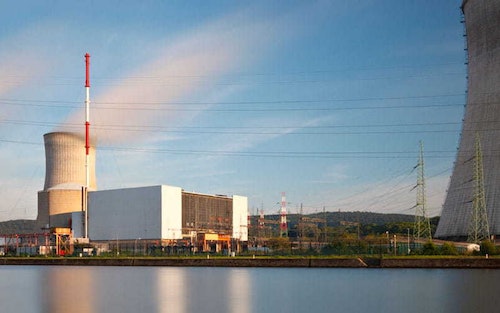
Countries developing nuclear power programmes tend to adopt the “Milestones” approach developed by the International Atomic Energy Agency (IAEA). Under this approach, the country in question will go through three phases in developing its nuclear infrastructure:
The end of each phase is marked by the achievement of a milestone which essentially describes a state of readiness that the country has achieved. The whole process from aspiration to commissioning can take between 10 and 15 years, and so, for countries which have elections, the commitment has to be an enduring one and outlast the life of several changes in administration. In the approach, the IAEA recognises some 19 infrastructure issues, each requiring specific actions during each of the three phases. This article considers one of the most important of those – the nuclear regulator.
Many countries without a commercial nuclear power plant may already have some form of nuclear regulator, due to it having a research reactor. That regulator will need to build up its capabilities to deal with the much wider range of issues of a civil nuclear programme involving power reactors many hundreds of time bigger.
Certainly, the regulator can not be associated with the owner or operator of the nuclear plant. The main aim is to avoid conflicts of interest, or even perceived conflicts.
It is generally recognised that it should be part of government (rather than a private entity), and be created through legislation which will determine its powers and reporting line to government.
Ideally, the government department which a regulator reports into should not be the same one as the that which is responsible for developing the nuclear program, such as the Ministry of Energy; but, this is not always the case.
One of the criticisms coming out of investigations into the Fukushima accident was that the nuclear regulator (Nuclear and Industrial Safety Agency) was indeed ultimately responsible to the same ministry (Ministry of Economy, Trade and Industry (METI)) which promoted nuclear policy – that has since changed with a new regulator created, the Nuclear Regulation Authority, NRA, now reporting to the Ministry of Economy.
The regulator plays a key part in enabling the nuclear programme to be introduced. It has to establish the relevant laws, regulations and guidance and have the ability to enforce these. It doesn’t do this blind, but can rely on guidance documents from the IAEA and others, and of course, engage the services of specialist consultants and law firms.
In addition to independence, the regulator also requires the necessary financial and human resources. As an organisation, the regulator doesn’t just grow overnight, but has to develop and grow with the programme. Several newcomer countries rely on “importing” the required capability until they can train up and populate their staff tree with their own nationals. This can be expensive, but in relation to the whole cost of the programme, it will be quite small.
The role of the regulator means that it does not just enforce the legislation. It is also there to help build public trust in itself, act as their advocate in many respects in challenging the developer. Some countries also have two regulators associated with nuclear, the second one being responsible for environmental matters. The range of subject areas both should deal with not only covers nuclear safety, including licensing, but also nuclear security and safeguards, and transport.
This has just been a brief introduction to the important role of the nuclear regulator in developing a country’s nuclear power. As an exercise you may care to look at your own country’s regulatory system and whether they have the following characteristics:
John Mathieson is a non legal technical advisor on nuclear energy related issues in a number of key international markets.
Prospect Law is a multi-disciplinary practice with specialist expertise in the energy and environmental sectors with particular experience in the low carbon energy sector. The firm is made up of lawyers, engineers, surveyors and finance experts.
This article remains the copyright property of Prospect Law Ltd and neither the article nor any part of it may be published or copied without the prior written permission of the directors of Prospect Law.
This article is not intended to constitute legal or other professional advice and it should not be relied on in any way.
Prospect is a multi-disciplinary practice with specialist expertise in the energy and environmental sectors with particular experience in the low carbon energy sector. The firm is made up of lawyers, engineers, insurance and risk management specialists, and finance experts.
This article remains the copyright property of Prospect Law Ltd and neither the article nor any part of it may be published or copied without the prior written permission of the directors of Prospect Law.
This article is not intended to constitute legal or other professional advice and it should not be relied on in any way.
Further Reading
Judicial Review has been making headlines recently. Our JR expert Nina Winter shares the changes to Judicial Review and the ...
Australia’s stance on civil domestic nuclear power has taken asurprising turn in recent days, with the announcement by the ...
In our regular column for Wind Energy Network, we focus on ESG and why it is now important for businesses ...
We review some of the key ESG developments, trends and Private Sector Investment reaching the headlines in the last few ...
There is currently a trend in the ESG world of increasing regulation and investigations by regulatory bodies – these regulations and ...
How does a business sustain success and consistency? What impact can poor policies and bad reputation have on a company’...