Shipping to Face Net-Zero Emissions Framework by 2028
After more than a decade of negotiation, the International Maritime Organization (IMO) has taken a decisive step toward decarbonising the ...

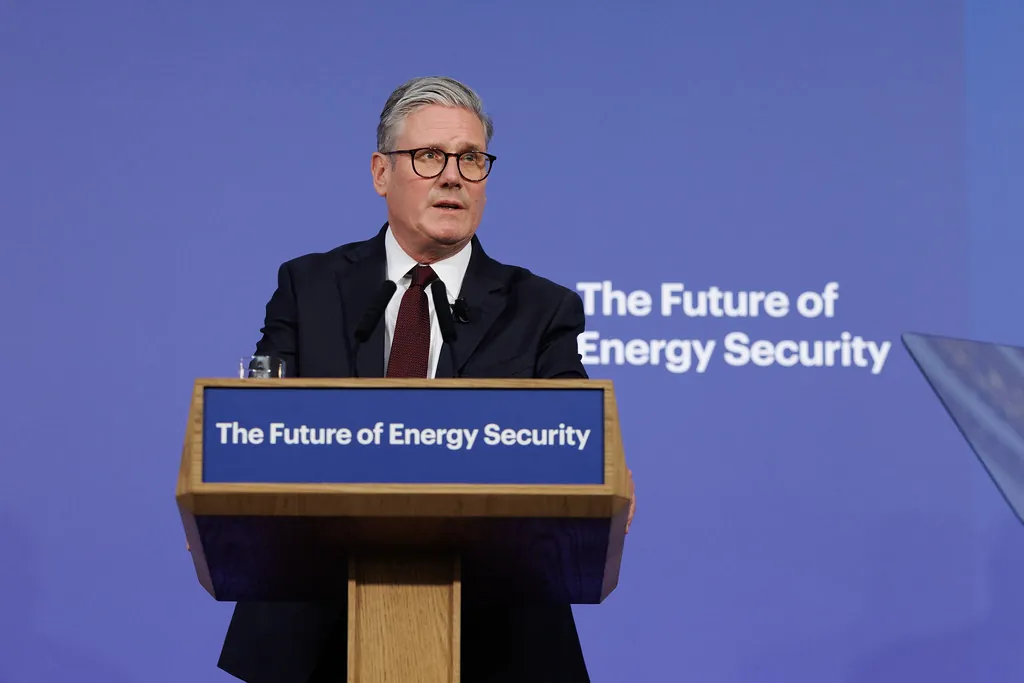
The recently published interim report by the Nuclear Regulatory Taskforce “Taskforce to tackle regulatory barriers holding back nuclear” provides an analysis of the current nuclear regulatory system in the UK. It is calling for radical reform of the system “to enable speedy and cost-effective delivery of new civil and defence investment and existing operations.”
The report covers many aspects of implementing new nuclear projects and identifies a number of areas for improvement in order to speed up the regulatory process and deliver a “radical reset” to unlock investment, innovation and timely delivery.
The Government’s agenda is clearly set out in the press release which states:
The report itself is more measured, and well-written. However, there appears to us to be a significant omission relating to the disposition of the resulting nuclear waste, in particular the spent fuel arisings from AMRs and SMRs.
The Task Force now seeks cooperation from interested parties “such that we may progress, in cohesion, with resolving the challenges of the day and unlocking the UK’s nuclear potential.”
The Task Force has asked the following questions:
Please engage with the Task Force directly at the earliest opportunity if you wish to contribute your views in response to any of these questions or indeed to raise any issues that are not covered in the Interim Report.
Nuclear regulation: input to the Nuclear Regulatory Taskforce review – GOV.UK
The pursuit of a site for a Geological Disposal Facility in the UK has had many false starts and has taken over four decades to get to where it is now under the stewardship of the Nuclear Decommissioning Authority’s subsidiary, Nuclear Waste Services. This is not the fault of the regulators, of course, but we believe that there is now an opportunity for a rethink of the process.
We believe the Taskforce should take a look at a number of options related to spent fuel management in addition to and alongside the GDF:
*Recent studies focused on implementation of this option have been undertaken for Australia, Bulgaria, Croatia, ERDO, Estonia, Norway, Romania, Slovenia, the UK and the US.
John Ireland is an internationally experienced energy specialist and senior business executive skilled in the development, negotiation, and management of businesses and technically complex contracts within both the Government and private sectors. John has grown complex businesses in Asia and the Middle East, and assisted international organisations to develop business in and from the UK through joint ventures and partnerships.
John Mathieson has some 47 years’ experience in the nuclear industry, primarily involving the areas of radioactive waste management and decommissioning. John worked with the International Atomic Energy Agency and the European Commission, participating in expert missions, technical meetings and working groups. He has worked on projects assisting many overseas governments to develop financing, decommissioning and radioactive waste management strategies and infrastructures, including help establish a number of Waste Management Organisations.
David McIntosh was admitted as a Solicitor in 1988 and is a highly experienced commercial projects lawyer who has advised clients in a number of different fields across the nuclear and pharmaceutical sectors. He has a thorough understanding of the nuclear regulatory framework and the international conventions which govern nuclear third party liability. He worked for the Nuclear Decommissioning Authority for 15 years from 2005 to 2020 and during that time advised on decommissioning arrangements, procurement, regulatory, security and nuclear transport matters affecting the NDA and its SLCs and subsidiaries. Since joining Prospect Law in 2021 he has continued to advise on nuclear matters including acting for three trade associations with members across the nuclear supply chain and has for several years provided quarterly nuclear regulatory updates to a nuclear client. He continues to advise clients on regulatory matters in this sector.
John Warden brings 35 years of experience in the nuclear and defence sectors to Prospect. He specialises in nuclear reactor project structure and financing, implementation of nuclear technologies, and strategies to meet climate goals using nuclear power. He is increasingly active in the field of advanced nuclear technology, where he advises on the economics and feasibility of deploying small modular reactors and advanced nuclear technology.
If you would like advice on nuclear regulatory processes, waste management strategies, or the legal frameworks shaping new nuclear development, please get in touch consult the Nuclear Regulatory team at Prospect Law.
Prospect is a multi-disciplinary practice with specialist expertise in the energy and environmental sectors with particular experience in the low carbon energy sector. The firm is made up of lawyers, engineers, insurance and risk management specialists, and finance experts.
This article remains the copyright property of Prospect Law Ltd and neither the article nor any part of it may be published or copied without the prior written permission of the directors of Prospect Law.
This article is not intended to constitute legal or other professional advice and it should not be relied on in any way.
Further Reading
After more than a decade of negotiation, the International Maritime Organization (IMO) has taken a decisive step toward decarbonising the ...
As FIFA's Women's World Cup unfolds, sustainability takes centre stage in the world of sports. In light of previous challenges ...
Crude Oil Oil prices continued to rise amid concern that Russia and Saudi Arabia, who share a de facto duopoly ...
At COP28 last year, 25 countries committed to triple nuclear power capacity by 2050, implying an addition of 740 GWe to the current ...
Rory Tait test drives his top three electric vehicles and shares his views.As part of my journey to buying ...
The second part in his overview of data privacy then and now, our Data Privacy and Intellectual Property specialist, David ...