UAE Ready to Start-Up Its First Nuclear Reactor
The first unitof the Barakah nuclear power plant in the United Arab Emirates has received itsoperating licence from the UAE’...


We spend a great deal of time debating how businesses should behave, but remarkably little time debating who should own them. Yet ownership shapes incentives, governance and ultimately the outcomes businesses deliver for society. Whether an organisation is owned by shareholders, employees, customers or the wider community influences how it makes decisions, how it measures success and whose interests it ultimately serves. In that respect, mutuals and co-Operatives deserve far greater attention than they currently receive.
Unlike conventional shareholder-owned companies, mutuals and Co-Operatives exist primarily for the benefit of their members. Those members may be customers, employees, producers or communities, depending on the model. Rather than maximising returns for external investors, they seek to create long-term value for the people who use, work within or contribute to the organisation. The result is often a different set of priorities—ones that place greater emphasis on transparency, resilience, stewardship and community benefit alongside commercial success.
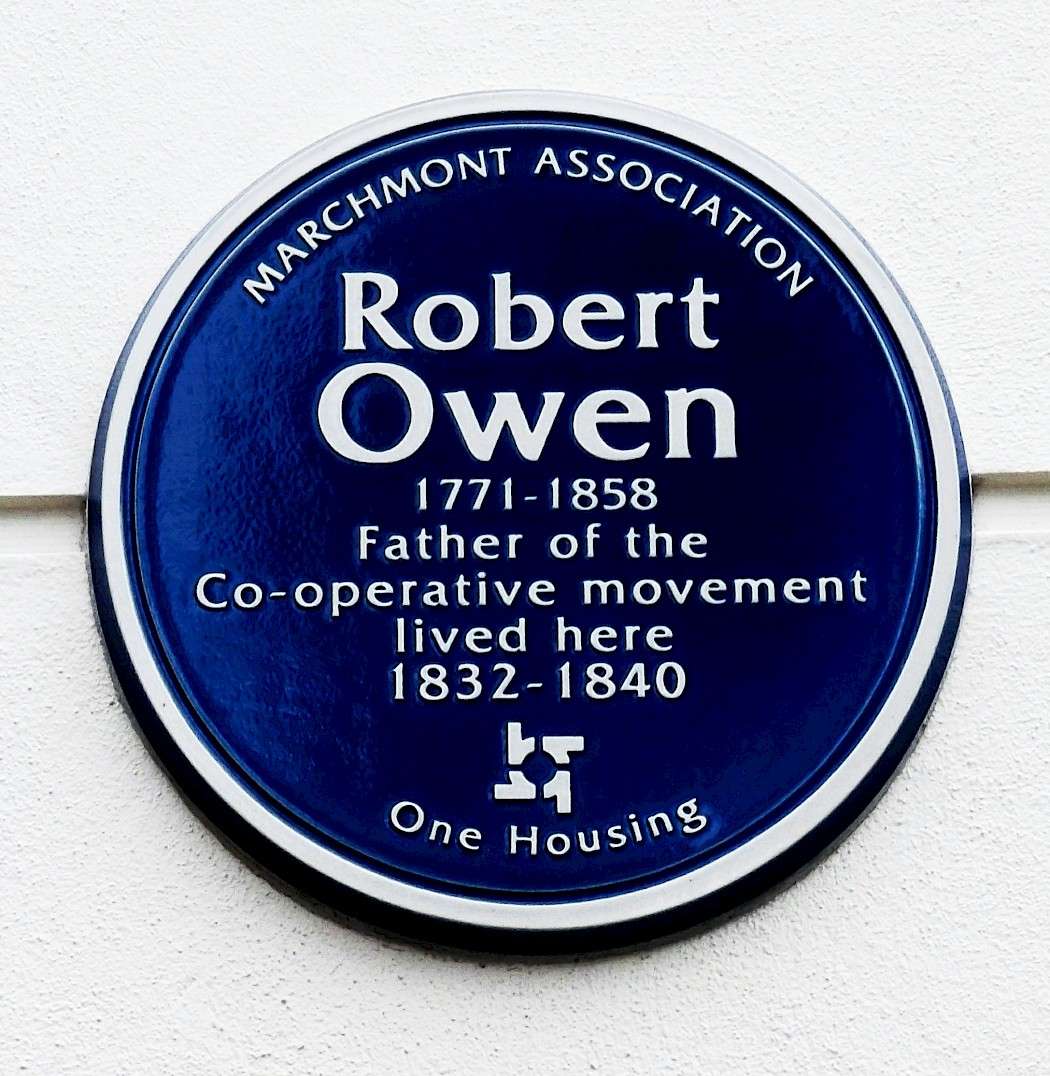
The co-operative movement has deep roots. On my cycle home from our Farringdon office in London, I pass a blue plaque commemorating Robert Owen (1771–1858), widely regarded as the intellectual father of the co-operative movement. He championed the idea that businesses could be organised around the welfare of workers and communities rather than the pursuit of profit alone. His experiments at New Lanark inspired generations of reformers.
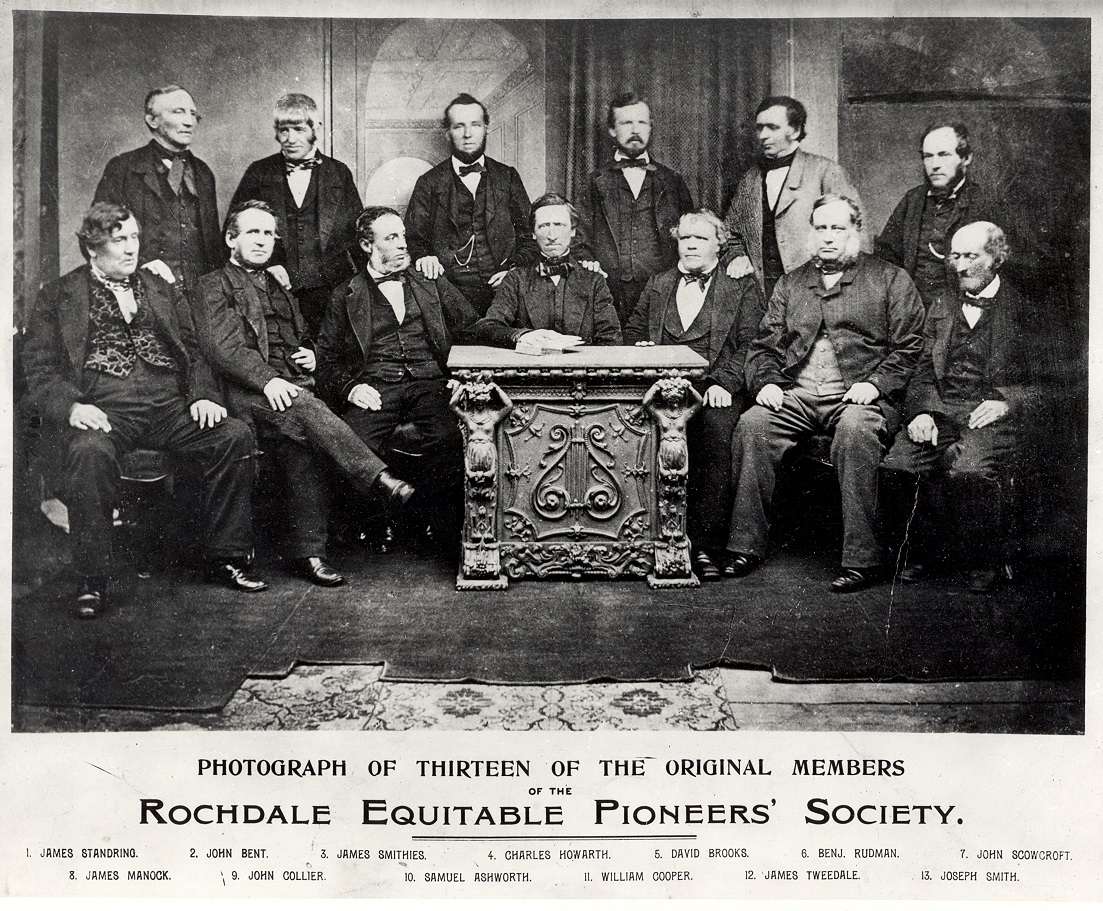
It was the Rochdale Pioneers, however, who in 1844 translated those ideals into a practical and enduring business model. Their principles of democratic ownership, member participation and shared benefit continue to underpin Co-Operatives across the world today.
It is easy to think of mutuals and Co-Operatives as a niche alternative to conventional profit-driven businesses. History tells a different story. Throughout the nineteenth and much of the twentieth century, millions of Britons were members of building societies, friendly societies and retail Co-Operatives. These organisations helped people save, insure themselves against hardship, buy homes and access affordable goods at a time when neither the state nor commercial markets met those needs effectively.
Britain’s insurance sector also has deep roots in collective approaches to managing risk. Friendly societies provided protection long before the modern welfare state. The Great Fire of London in 1666 created huge demand for fire insurance. The Hand in Hand Fire & Life Insurance Society, founded in London in 1696, was organised on mutual principles: policyholders were members, and the society existed for their benefit rather than for outside investors. Lloyd’s of London developed into a unique marketplace in which independent underwriters came together to pool expertise and insure maritime risks. Although Lloyd’s was never a mutual in the modern sense, it illustrates Britain’s long tradition of innovative risk-sharing institutions. Equally, the P&I Clubs that insure much of the world’s shipping are mutuals. For a firm such as Prospect Law, whose work with Prospect Risk frequently involves helping clients understand, allocate and insure risk, it is a reminder that some of our most enduring commercial institutions have been built on collaboration and long-term relationships, rather than simply the pursuit of shareholder returns.

Their relative decline was therefore not inevitable. It reflected a combination of demutualisations, changing capital markets and a legal and regulatory framework that increasingly evolved around the investor-owned company. That history matters because it demonstrates that ownership models are shaped not only by market forces, but also by public policy and the law.
The UK still has several successful examples. Nationwide Building Society, with more than 16 million members, has demonstrated that a customer-owned financial institution can compete effectively with commercial banks while maintaining a strong reputation for service and trust. The NFU Mutual was founded by seven farmers in 1910 – it now has over 900,000 members. The John Lewis Partnership, despite recent challenges, remains one of the world’s best-known employee-owned businesses. In Europe, Spain’s Mondragón Corporation has demonstrated that worker ownership can flourish at significant scale, achieving a level of growth that many conventional businesses would envy.

The attraction of mutual ownership is not simply philosophical. There are practical advantages. Because they are not driven by shareholder expectations, mutuals are often better placed to make long-term investment decisions. They can prioritise customer service, employee wellbeing and community benefit without being in constant tension with external investors demanding ever-higher returns.
That does not mean mutuals are automatically better businesses. They still require strong governance, capable management and financial discipline. Decision-making can sometimes be slower, and raising capital may be more difficult without access to equity markets. The mutual and co-operative ownership model is not a substitute for commercial competence.
However, there are many sectors where the mutual model appears particularly well suited. Financial services, insurance, community renewable energy, housing and social care all depend upon long-term relationships built on trust. In such sectors, aligning ownership with the interests of customers, employees or communities can create stronger incentives than traditional shareholder structures.
There is also a wider societal question. Public trust in both large corporations and public institutions has weakened in recent years. People increasingly want organisations that are accountable, transparent and visibly connected to the communities they serve. Mutuals and Co-Operatives offer one means of rebuilding that trust because governance is embedded within the membership rather than concentrated in distant shareholders.
Technology may also make mutual ownership easier than ever before. Digital platforms can simplify democratic participation, member engagement and transparent governance at a scale that was previously difficult to achieve. While much attention has been given to platform companies that centralise ownership and profits, there is growing interest in “platform Co-Operatives” that use technology while distributing value more broadly among those who create it.
There are encouraging signs that this debate is returning to the political agenda. The Labour Party has long-standing ties with the co-operative movement through its partnership with the Co-Operative Party and, in government, has reaffirmed its commitment to employee ownership, community wealth building and expanding opportunities for co-operative enterprise. Those commitments are welcome. However, warm words are not enough.
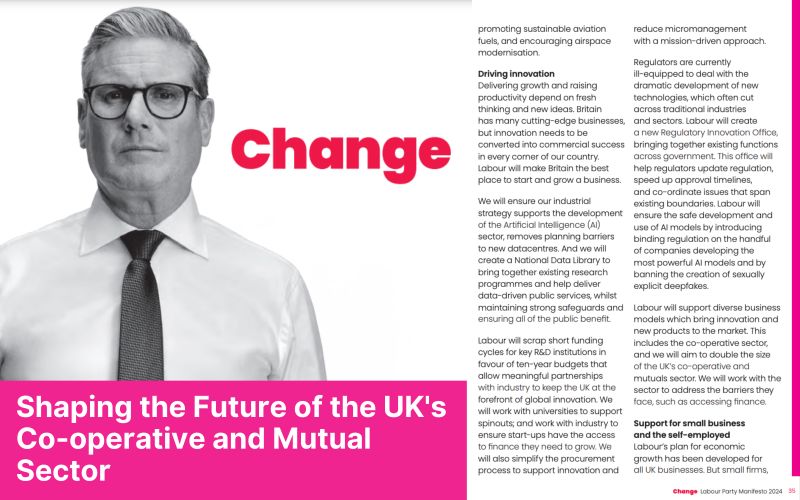
To date, there has been little tangible reform that materially improves the environment in which Co-Operatives and mutuals operate. The challenge is not simply one of political will; it is also one of legal design. Company law, capital markets, taxation and aspects of financial regulation have all evolved around the assumption that the investor-owned company is the default business model. That is unsurprising given the dominance of the corporate form over the last century, but it has meant that alternative ownership structures have received comparatively little legislative attention.
The result is not that mutuals and Co-Operatives are prevented from succeeding, but that they often operate at a structural disadvantage. Raising growth capital is inherently more difficult where ordinary equity cannot easily be issued. The legal framework governing co-operative and community benefit societies has not evolved with the same pace or attention as mainstream company law. Business succession policy has also tended to assume that owners will sell to third parties rather than employees or members. In effect, the law has, over many decades, embedded a preference for one model of ownership over others.
If government genuinely believes that ownership matters, it should do more than celebrate the movement’s history. It should actively remove the barriers that prevent or discourage new mutuals and Co-Operatives from forming and existing ones from growing.
None of these measures would amount to preferential treatment; they would simply create a genuinely level playing field on which different ownership models could compete fairly.
Legal reform alone, however, will not be enough. Ownership is rarely discussed in schools, universities or even business education. Entrepreneurs are routinely advised on how to incorporate a company or raise equity finance, but are seldom encouraged to consider whether a mutual or co-operative structure might better align with their objectives. Likewise, consumers often choose financial products, insurance or utilities without realising that member-owned alternatives even exist. If government genuinely believes in fostering a more diverse economy, it should not only modernise the law but also champion mutual ownership as a credible and mainstream business model. Greater awareness would not require government to pick winners; it would simply ensure that individuals and businesses make informed choices about the ownership structures available to them.
This is not about replacing private enterprise or diminishing the role of shareholder-owned companies, which will continue to drive innovation, investment and economic growth. Rather, it is about recognising that different ownership models are suited to different purposes. Where trust, long-term stewardship and community benefit are central to success, the mutual model often offers significant advantages.
The real question is not whether mutuals should replace conventional companies. History shows they never needed to. For generations they sat alongside shareholder-owned businesses, each serving different needs and communities.
If ownership influences behaviour—as decades of corporate governance research suggests it does—then ownership should be a central concern of policymakers. Mutuals and Co-Operatives are not relics of the nineteenth century; they are proven commercial models with a distinguished history and a potentially important future. The question is no longer whether they have a place in the modern economy. They clearly do. The question is whether our legal framework will continue to treat them as exceptions, or finally recognise them as an integral part of a diverse, resilient and productive market economy. The Labour Party has long championed the co-operative movement. It now has the opportunity—and, arguably, the responsibility—to translate that commitment into meaningful legislative reform.
Prospect is a multi-disciplinary practice with specialist expertise in the energy and environmental sectors with particular experience in the low carbon energy sector. The firm is made up of lawyers, engineers, insurance and risk management specialists, and finance experts.
This article remains the copyright property of Prospect Law Ltd and neither the article nor any part of it may be published or copied without the prior written permission of the directors of Prospect Law.
This article is not intended to constitute legal or other professional advice and it should not be relied on in any way.
Further Reading
The first unitof the Barakah nuclear power plant in the United Arab Emirates has received itsoperating licence from the UAE’...
Prospect was delighted to represent Brent Council in two linked criminal prosecutions which concluded today at Harrow Crown Court under ...
In R (Hill) v Derby City Council, Mr Justice Supperstone considered a claim by a local resident that sought to ...
Our latest article for Wind Energy Network Magazine in which Senior Solicitor, Reina Van Pallandt discusses what to look out ...
An interesting conference was held in Manchester in May on ‘Enhancing the Nuclear Economy’ organised by Nuclear Strategy. The conference ...
Some years ago I was asked by a client from the oil and gas industry to produce a risk assessment, ...